
Most folks in Alpharetta and Milton never think about which way their water runs. Clean water comes in through the meter, used water leaves through the drain, and that’s the whole story. Until the day it isn’t. Every year we hear from homeowners who found out the hard way that water can travel backward, and when it does, it rarely brings anything good along for the ride.
So let’s talk about backflow: what it is, where it hides on your property, and what you can do about it before the first hard freeze.
What Backflow Actually Means
Backflow is water moving the opposite way from how your plumbing was designed to move it. It usually happens one of two ways:
- Backsiphonage. Pressure in the public line drops, say from a water main break or a fire crew pulling hard on a hydrant, and water on your side gets pulled back toward the street.
- Backpressure. Pressure on your side climbs higher than the supply side, from a pump, a boiler or an elevated tank, and pushes water the wrong way.
Either way, if a hose is sitting in a bucket of weed killer or a sprinkler head is buried in soil soaked with fertilizer and pet waste, that water has a path back into the pipes you drink from. Plumbers call that link between clean water and dirty water a cross-connection.
Where It Shows Up Around Your Home
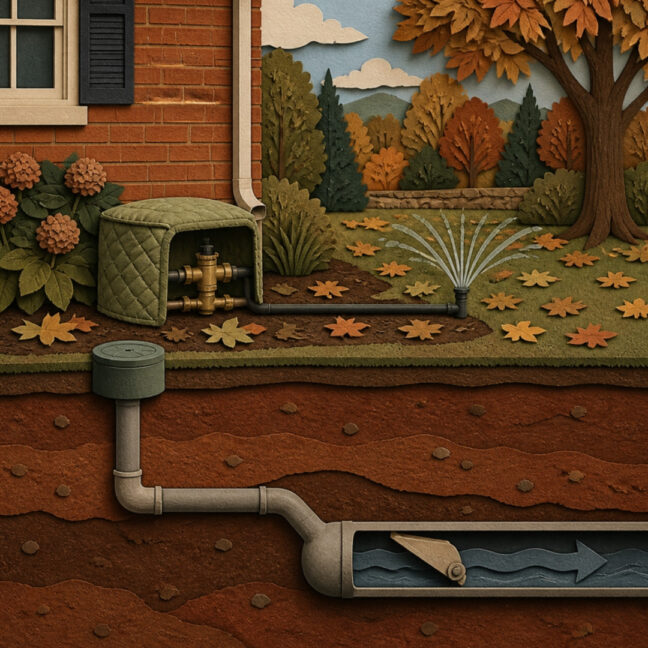
- Lawn irrigation. The big one in North Fulton. Sprinkler heads sit right down in the dirt, the mulch and whatever runs off the yard.
- Garden hoses left in pools, buckets, pet bowls or sprayer tanks.
- Boilers and some water treatment equipment that run under their own pressure.
- Your sewer or septic line. A different kind of backflow, and the one we see most: wastewater heading back toward the house because a line is blocked, a tank is full or the ground is saturated after heavy rain.
What Georgia and Fulton County Expect
Georgia’s drinking water rules don’t allow connections that could let contamination backflow into the public water system. Testable backflow prevention assemblies have to be field tested after they’re installed, repaired or moved, and at least once a year after that, by a certified tester. An assembly that fails has to be repaired or replaced within 30 days.
Fulton County’s water department works the same way. Testable devices get tested every year, and repaired if needed, and a certified tester sends the results to the county. The type of device a property needs depends on its hazard level, so a restaurant in Roswell and a house in Johns Creek won’t always have the same setup. Installation, testing and upkeep fall on the property owner. If a city utility supplies your water instead, ask them for their schedule.
Get Ready Before the Freeze
Late October is the right time to look at this. Irrigation backflow preventers usually sit above ground near the foundation, brass and valves out in the open air. A hard freeze can crack the body or the parts inside, and you won’t know until the sprinklers come back on in spring.
- Shut off the water to the irrigation system once you’re finished watering for the season.
- Drain the device following the manufacturer’s directions, or have your irrigation contractor do it.
- Cover it with an insulated pouch or box, loose enough that a tester can still reach the valves.
- If your annual test is coming due, get it done before you winterize so you’re not chasing paperwork in March.
Don’t Forget the Other Direction
On the wastewater side, the best protection against backflow is a system that drains freely. A tank pumped on schedule, a clear line between the house and the tank, and a cleanout you can actually reach make a sewage backup far less likely. Where the layout calls for it, a check valve or backwater valve on the sewer line adds one more layer between your floors and whatever is downstream.
That’s the work we do every week in Alpharetta, Milton, Cumming and Sandy Springs: pumping, line repair, hydro jetting and backflow prevention on the sewer side. If you’re not sure how your septic or sewer line is protected, we’re glad to come take a look. Matt Banta has spent more than 20 years working under North Georgia yards, and he’ll tell you plainly what you have and what, if anything, it needs.
Call Action Septic Tank Service at 770-922-1434 or visit actionseptictankservice.com to schedule service.