
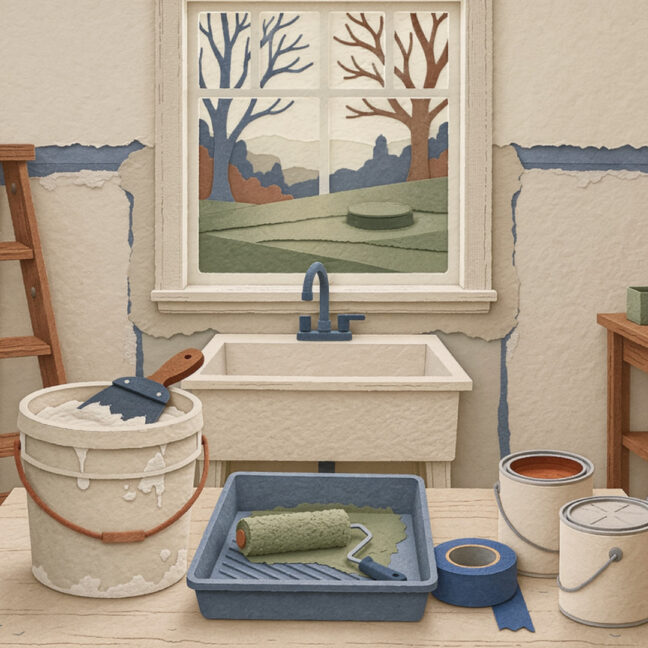
Once the turkey is put away and the guests head home, a lot of North Fulton homeowners turn to the projects they have been putting off all year. A fresh coat of paint in the guest room. New tile in the hall bath. A patch on that drywall the kids dented in July. It is good, honest work, and we love seeing people take care of their homes.
Here is the part nobody mentions at the paint counter. When the job is done, the cleanup usually happens at a sink, and if your home in Alpharetta, Milton or Roswell runs on a septic system, everything you rinse ends up in your tank.
Why Your Tank Cares What Goes Down the Sink
Your septic tank is a living system. Bacteria inside it break down household waste, solids settle to the bottom as sludge, and the clearer liquid moves out to your drain field, where the soil finishes the job. The EPA’s SepticSmart guidance is plain about it: paint, solvents and toxic chemicals do not belong in your drains. They can kill the bacteria doing the work, and some of them pass straight through the tank and into the soil and groundwater around your home.
Construction materials cause a different kind of trouble. They do not dissolve. They settle, harden and take up space that was meant for normal household waste.
The Usual Suspects From Winter Projects
- Latex paint rinse water. One quick brush wash will not ruin a tank, but rinsing rollers and trays over and over sends a steady stream of paint solids and chemicals into it.
- Oil-based paint, stain, mineral spirits and paint thinner. These are solvents. They are hard on the bacteria in your tank and should never go down any drain.
- Drywall joint compound. That mud is made to set up and stay put. In your pipes and tank, it settles into a heavy layer that behaves a lot like concrete.
- Grout, thinset and tile mortar. Same story. Washing out a mixing bucket in the laundry sink can leave a hard deposit in the line between your house and your tank.
- Caulk, adhesives and leftover sealers. Sticky, slow to break down, and not something your tank was built to handle.
A Cleanup Routine That Protects Your System
You do not have to give up your projects. You just have to change where the cleanup happens. Here is what we tell our customers in Johns Creek, Cumming and Sandy Springs:
- Scrape first. Wipe brushes, rollers and trowels on newspaper or cardboard before any water touches them. Most of the mess comes off right there.
- Let the leftovers dry. Leftover latex paint can be left open or mixed with a hardener until it is solid, then handled with your household trash where local rules allow. Leftover mud and grout can harden in the bucket and be tossed the same way.
- Rinse outside, away from the drain field. A quick rinse on a patch of gravel or dirt, well clear of your tank, your drain field and any storm drain, keeps that water out of your system.
- Take solvents to a collection site. Oil-based paints, thinners and stains belong at a household hazardous waste drop-off or collection day. Check with your county for the next one.
- Skip the chemical drain opener. If the sink slows down after a project, harsh drain cleaners only add more chemicals to your tank. A slow drain is worth a professional look.
When a Project Already Went Down the Drain
It happens. Someone washed out the grout bucket before you could stop them, or a week of paint cleanup went into the basement sink. Watch for slow drains, gurgling pipes or a sewage smell in the house. Those can mean material has built up in the line or the tank.
We see this more than you might think, and it is usually fixable. Depending on what we find, it may mean pumping the tank, cleaning the effluent filter, or hydro jetting the line to clear hardened buildup before it causes a backup.
The best time to catch it is early. If you have had a big renovation this year and cannot remember the last time your tank was pumped, winter is a smart time to get on the schedule.
Call Action Septic Tank Service at 770-922-1434 or visit actionseptictankservice.com to schedule service.